
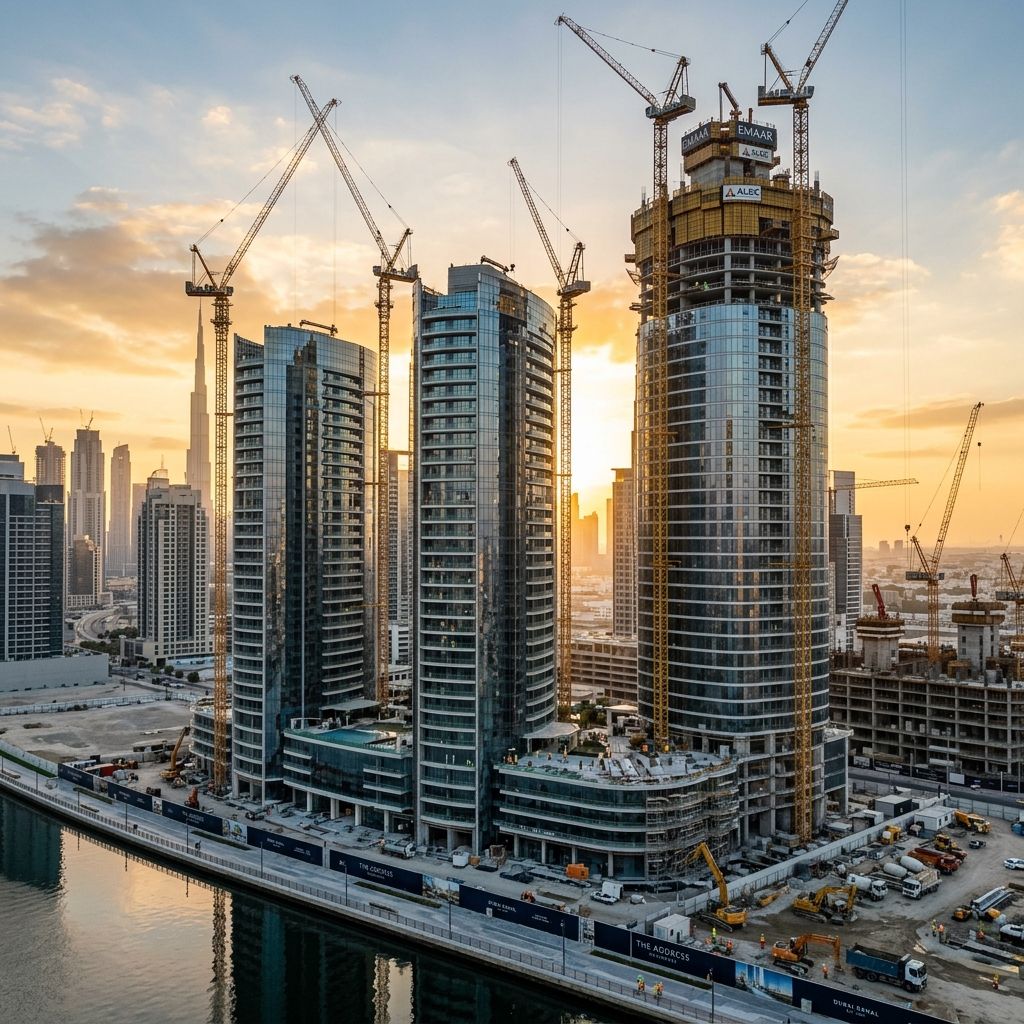
Off-Plan Payment Plans in Dubai Explained (30/70, 40/60, Post-Handover)
If you're comparing off-plan properties in Dubai, you've probably noticed something confusing fast: every project seems to advertise a different off-plan payment plan, and the numbers don't mean the same thing from one developer to the next. A "30/70" plan from one project isn't automatically better than a "40/60" from another — it depends on what's inside those numbers, and how they line up with your own cash flow. This guide breaks down how Dubai's main off-plan payment structures actually work, so you can compare projects properly instead of just comparing headline percentages.
Why Off-Plan Payment Plans Vary So Much in Dubai
Dubai's off-plan market is regulated by the Dubai Land Department (DLD) and the Real Estate Regulatory Agency (RERA), which require developers to hold buyer payments in escrow accounts tied to construction milestones. Within that framework, though, developers have real flexibility in how they structure the payment schedule — which is why plans range from aggressive front-loaded structures to extended post-handover options. Developers use payment plans as a competitive lever: a lower upfront commitment can make a project more accessible to a wider pool of investors, while a heavier front-loaded plan usually reflects a more advanced construction stage or higher developer confidence in near-term sales. Understanding the mechanics behind the numbers — not just the ratio — is what actually protects your investment.
Off-Plan vs Ready Property in Dubai: Which Should You Buy?
How Off-Plan Payment Plans Actually Work
Every off-plan payment plan in Dubai is built from three components: the booking deposit, a series of construction-linked installments, and a handover or post-handover balance. Here's how each typically functions.
1. Booking deposit
This is your entry payment to reserve the unit, typically paid alongside the Sales and Purchase Agreement (SPA). It's usually the largest single early payment and is what locks in your unit and price.
2. Construction-linked installments
The remaining pre-handover balance is usually split into scheduled payments tied to construction milestones (foundation complete, structure at a certain floor, finishing stages, and so on) rather than fixed calendar dates. This means your payment schedule can move if construction runs ahead of or behind projection — a detail worth clarifying before you sign.
3. Handover and post-handover balance
The final portion is due either on handover (when you receive the keys and title transfer becomes possible) or spread across a defined period after handover, depending on the plan type. This is where 30/70, 40/60, and post-handover structures start to look genuinely different from each other.
Financing an Off-Plan Property Purchase in Dubai
What Is a 30/70 Payment Plan?
A 30/70 payment plan means 30% of the purchase price is paid during the construction period, and the remaining 70% is due on handover — when the unit is complete and ready for transfer. This structure is common in mid-to-late construction-stage projects, where the developer needs a meaningful chunk of funding through the build but is comfortable collecting the majority of the price only once the asset is delivered.
For buyers, a 30/70 structure means a lighter cash outflow during construction, followed by a large single payment (often financed through end-user or investor mortgages) at handover. It suits investors who expect to secure financing closer to completion, or who want more capital available for other opportunities during the build period.
What Is a 40/60 Payment Plan?
A 40/60 payment plan follows the same logic with a different split: 40% paid during construction, 60% due at handover. This is typically seen on projects at an earlier construction stage or where the developer wants a stronger funding base through the build. From a buyer's perspective, it front-loads slightly more of the total commitment before you're holding a completed asset, in exchange for what's usually a smaller handover payment relative to a 30/70 structure.
Neither ratio is inherently "better" — the right one depends on your liquidity through the construction period versus at completion, and how confident you are in your financing plan for the final balance.
What Is a Post-Handover Payment Plan?
A post-handover payment plan extends part of the balance beyond handover — meaning you can take possession of, and in many cases start renting out, the property before the full purchase price is paid. A typical structure might be an upfront and construction-period commitment (for example, 50-60% pre-handover) with the remainder spread across 1-3 years after handover, interest-free in most cases, paid directly to the developer rather than through a bank.
This structure has become increasingly popular with investors because it can let rental income from the completed unit contribute toward the remaining payments. It's worth confirming, project by project, whether the post-handover balance is truly interest-free, what the exact installment schedule looks like, and whether there are penalties for early or late payment — these terms vary by developer and aren't standardized across the market.
Comparing Payment Plan Structures at a Glance
| Plan Type | Pre-Handover Commitment | Handover Payment | Best Suited For |
|---|---|---|---|
| 30/70 | 30% during construction | 70% at handover | Buyers expecting to finance the balance near completion; more liquidity needed during build |
| 40/60 | 40% during construction | 60% at handover | Buyers comfortable with a heavier construction-phase commitment; often earlier-stage projects |
| Post-Handover | 50-60%+ pre-handover (varies) | Remainder spread over 1-3 years post-handover | Investors who want to use rental income to help fund remaining installments |
Every plan above is a general market structure, not a fixed rule — always confirm the exact schedule, milestones, and any conditions in the SPA for the specific project you're considering.
Worked Example: Comparing Two Structures on the Same Budget
To make this concrete, here's how a hypothetical AED 2,000,000 unit compares under two different structures — figures are illustrative only and not tied to any specific current listing.
Under a 30/70 plan:
- Booking + construction installments: AED 600,000 (30%) paid in stages during the build
- Handover payment: AED 1,400,000 (70%) due on completion, commonly financed via mortgage at that stage
Under a post-handover plan (55% pre-handover / 45% over 24 months post-handover):
- Pre-handover payments: AED 1,100,000 (55%) during the build
- Post-handover installments: AED 900,000 (45%) spread over 24 months, roughly AED 37,500/month, which an investor might partially offset with rental income once the unit is tenanted
The 30/70 structure demands less cash during construction but a larger single payment at completion, usually bridged by financing. The post-handover structure spreads more of the total cost over time but requires a larger combined commitment before handover. Neither is objectively cheaper — the real cost comparison depends on financing rates, rental yield timing, and your own liquidity profile.
Exploring the Dubai property market? SMS Realty's advisors can talk you through what actually fits your budget and goals — book a free consultation before you start comparing listings.
Why Work With SMS Realty on an Off-Plan Purchase
Payment plan structures look straightforward on a brochure — the details that actually affect your return (milestone-linked triggers, post-handover interest terms, developer track record on delivery timelines) rarely are. SMS Realty's advisors work through the full SPA and payment schedule with you before you commit, and can walk you through live inventory across multiple developers and payment structures side by side, so you're comparing the plan that fits your situation, not just the one in front of you.
Common Mistakes to Avoid With Off-Plan Payment Plans
- Comparing only the headline ratio. A 30/70 plan on a slower-selling project and a 30/70 plan on a fast-moving one aren't interchangeable — check the actual milestone schedule and construction progress.
- Assuming post-handover payments are always interest-free. Confirm this in writing for the specific project; terms differ by developer.
- Not planning the handover payment early. If your plan ends with a large balance due at handover, start your financing conversation well before completion, not after.
- Ignoring service charges and DLD fees. These sit outside the payment plan itself but affect your total cash requirement — budget for them separately.
- Treating rental income as guaranteed offset for post-handover installments. Tenanting timelines vary, and rental income should be treated as a potential buffer, not a certainty, when planning post-handover payments.
Frequently Asked Questions
What is a 30/70 payment plan in Dubai?
A 30/70 payment plan means 30% of the property price is paid in installments during construction, with the remaining 70% due when the unit is handed over. It's one of the more common off-plan structures for projects in mid-to-late construction stages.
What is a post-handover payment plan in Dubai?
A post-handover payment plan lets buyers pay part of the property price after taking possession, typically spread over 1-3 years, often interest-free through the developer. It allows buyers to move in or start renting the unit before the full price is paid.
Is a post-handover payment plan better than 30/70 or 40/60?
It depends on your financial position. Post-handover plans reduce the burden of arranging financing at handover and can let rental income help cover remaining costs, while 30/70 or 40/60 plans typically mean the property is fully paid off sooner, with less ongoing commitment after handover.
Do I need a mortgage for an off-plan property in Dubai?
Not necessarily during construction, since most pre-handover installments are paid directly to the developer. Many buyers do arrange a mortgage for the final handover balance under 30/70 or 40/60 plans, or in some cases to help cover post-handover installments — this is worth planning with an advisor ahead of time.
Are Dubai off-plan payments protected if construction is delayed?
Payments are held in RERA-regulated escrow accounts tied to construction milestones, which is designed to protect buyer funds against misuse. Delays can still affect your payment timeline, so it's worth understanding the project's construction progress and developer track record before committing.
Conclusion
30/70, 40/60, and post-handover plans all get you to the same destination — full ownership of a completed Dubai property — but they ask very different things of your cash flow along the way. The right structure depends on your financing plan, your liquidity through construction, and how you intend to use the property once it's handed over. Before comparing specific projects, it's worth mapping your own numbers against each structure type.
Ready to see what's available right now? SMS Realty can walk you through live listings that match your criteria — speak to an advisor today or request the current inventory list.

Authored By
Sanjit Banerjee
Founder & CEO of SMS Realty, specializing in Dubai's strategic growth corridors and high-yield investment structures.