
Airbnb & Short-Term Rental Investment in Dubai: License, Rules & ROI
Dubai's short-term rental market is no longer a grey-area side hustle — it's a regulated, tourism-department-monitored business line, and that's exactly what makes it interesting for investors. With overnight visitor numbers hitting 19.59 million in 2025 (a 5% increase on the prior year and Dubai's third consecutive record tourism year), demand for furnished short-stay accommodation isn't a temporary spike — it's a structural trend. But an Airbnb investment in Dubai only works if you go in understanding the licensing framework, the real running costs, and how short-term returns compare to a standard long-term lease. This guide walks through all three.
Why Investors Are Looking at Dubai Holiday Homes
Dubai's appeal for short-term rental investment comes down to three overlapping forces: sustained tourist demand, zero personal income tax on rental income, and a licensing system that, unlike many global cities, is clear rather than ambiguous. December 2025 alone brought Dubai over two million international overnight visitors for the first time in a single month, and hotel occupancy across the city has been tracking above 80%.
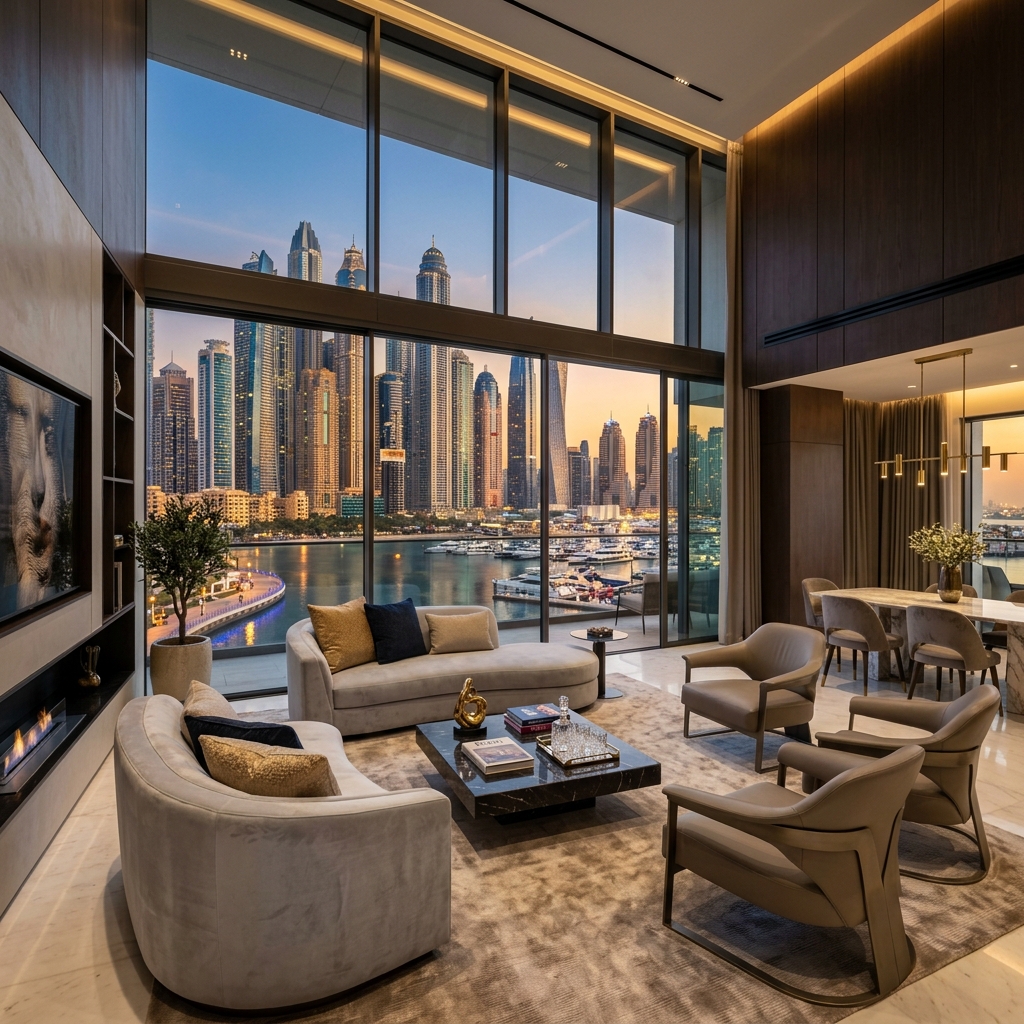
That demand doesn't stay contained to hotels; furnished apartments in tourist-heavy districts like Dubai Marina, Downtown Dubai, Palm Jumeirah, and Business Bay compete directly for the same guests, often offering more space and flexibility at competitive nightly rates.
Before jumping in, it helps to understand how rental yield is calculated in Dubai across different asset classes.
How the Dubai Holiday Home Licence Actually Works
What licence do you need to run an Airbnb in Dubai? You need a Holiday Home Permit issued by Dubai's Department of Economy and Tourism (DET), the authority that absorbed the former DTCM. This permit is what legally separates a compliant "holiday home" from an unlicensed listing, and it's actively checked by booking platforms and municipal inspectors.
The Step-by-Step Licensing Process
- Confirm your property is eligible: Hotel apartments cannot be licensed as holiday homes. If your sale and purchase agreement prohibits short-term rentals, or your building's owners' association has voted against them, DET will not issue a permit regardless of your ownership status. Always confirm in writing before buying.
- Choose your registration type: Individual owners can register directly through the DET portal and self-manage up to eight units without needing a commercial trade licence. Beyond eight units, or if managing for others, you must register as a licensed holiday home operator.
- Gather required documents: Title deed, Emirates ID or passport, DET authorisation form, and a DEWA utility bill (no older than 3 months) in the owner's or licensee's name. If subletting, a landlord NOC and registered Ejari contract are mandatory.
- Classify the unit & pay the fee: Each unit is classified as Standard or Deluxe, which determines the Tourism Dirham rate collected. Initial application carries a fixed government fee (currently around AED 1,520).
- Display your permit number: Once approved (typically within 1 business day), your property receives a Holiday Home Permit Number, which must appear on every online listing (Airbnb, Booking.com, VRBO).
- File monthly compliance: Tourism Dirham collected per occupied bedroom per night must be submitted to DET by the 15th of each month, alongside guest ID registration for every stay.
Read more: Do you pay tax on Dubai property as a foreign investor?
Short-Term Rental vs. Long-Term Lease: The Honest Comparison
Neither strategy is universally better; the right choice depends on your involvement level, risk tolerance, and cash-flow goals.
| Factor | Short-Term Rental (Airbnb/Holiday Home) | Long-Term Lease |
|---|---|---|
| Licensing | DET Holiday Home Permit required per unit | Standard Ejari tenancy contract |
| Income potential | Higher gross revenue in tourist areas, seasonal upside | Stable, predictable, fixed annual rent |
| Occupancy | Fluctuates with tourism season (peak Oct–April) | Near 100% once tenanted under Ejari |
| Management effort | High — check-ins, cleaning, guest messaging, filings | Low — annual renewal, minor maintenance |
| Management cost | 15–25% of gross revenue if outsourced | Typically 5% or zero if self-managed |
| VAT | 5% mandatory registration above AED 375,000 turnover | Exempt for residential leases |
| Best suited to | Prime tourist locations; active investors comfortable with operations | Passive investors seeking steady hands-off yield |
What It Actually Costs to Run a Dubai Holiday Home
Transparent cost modeling matters far more than optimistic gross projections. Based on published DET schedules and market data:
| Cost Item | Typical Range / Structure |
|---|---|
| Initial DET permit application | Fixed government fee (~AED 1,520) |
| Tourism Dirham | AED 10 (Standard) or AED 15 (Deluxe) per bedroom/night |
| Municipality fee | 10% of booking revenue remitted to Dubai Municipality |
| VAT | 5% once taxable turnover exceeds AED 375,000 in 12 months |
| Holiday home insurance | AED 1,000–3,000 annually (standard home insurance excludes guest coverage) |
| Professional management fee | 15–25% of gross booking revenue |
| Trade licence renewal | Required annually for operators with over 8 units |
What Return Can You Realistically Expect?
Dubai's overall residential rental yield tracks around 6–7% gross on long-term leases. Analytics platforms tracking active short-term listings report gross yields in prime tourist locations running 20–30% higher than standard leases on smaller units in areas like JVC, Business Bay, and Marina. However, net yield narrows after accounting for furnishing amortization, management fees, utilities, and off-peak vacancies.
Read more: How a Dubai property purchase can support a Golden Visa application.
Why Work with SMS Realty on a Holiday Home Investment
Licensing compliance, building eligibility, and realistic net yield modelling are where overseas investors often make costly errors. SMS Realty (operating alongside SMS Consulting) verifies building-level short-term rental rules prior to purchase, helps structure company formation or tax setups, and ensures your acquisition aligns with Golden Visa eligibility.
Common Mistakes to Avoid
- Buying before checking building rules: A permitted holiday home in one tower doesn't guarantee permission in the next. Always get written developer/OA confirmation.
- Ignoring the 8-unit threshold: Self-managing past eight units requires a commercial trade licence — plan your corporate structure early.
- Underestimating operating expenses: Tourism Dirham, municipality fees, VAT, and management fees take a real slice of revenue — model net return, not gross booking totals.
- Relying on standard home insurance: Standard policies exclude guest damage; dedicated holiday home coverage is mandatory.
- Missing the monthly filing deadline: Tourism Dirham submissions are due by the 15th of each month to avoid automatic fines.
Frequently Asked Questions
Do you need a licence for Airbnb in Dubai?
How much does a Dubai holiday home permit cost?
Can foreigners run an Airbnb in Dubai?
Is Airbnb more profitable than a long-term rental in Dubai?
How many holiday home units can one owner register?
Does short-term rental income in Dubai get taxed?
What happens if I operate without a DET permit?
The Bottom Line
An Airbnb investment in Dubai can outperform a standard long-term lease, but only when the building is genuinely eligible, the licence is in place before the first guest checks in, and the return you're modelling is net, not gross.
"Short-term rentals offer exceptional upside in Dubai, provided you treat compliance and net yield modeling with corporate rigor." — Sanjit Banerjee, CEO, SMS Realty
Exploring the Dubai property market for short-term rental income? SMS Realty's advisors can walk you through which buildings, areas, and unit types support a compliant holiday home licence before you commit — request a personalised comparison or explore current property inventory.

Authored By
Sanjit Banerjee
Founder & CEO of SMS Realty, specializing in Dubai's strategic growth corridors and high-yield investment structures.