
How to Invest in Dubai Real Estate: A Practical 2026 Guide for Foreign Buyers
Dubai has become one of the world's most searched-for property markets, and for good reason: no personal income tax, no annual property tax, 100% foreign ownership in designated freehold areas, and a fast, digitised buying process through the Dubai Land Department (DLD). If you're weighing whether to invest in Dubai real estate, the opportunity is real — but so is the need to understand exactly how the market works before you commit capital.
This guide walks through why investors from India, the UK, Africa, and beyond are looking at Dubai property investment, what it actually costs to buy, which property types and areas suit different goals, and the legal steps that protect you as a foreign, non-resident buyer.
Why Investors Are Looking at Dubai Right Now
Dubai's real estate market operates under a regulatory structure most global investors find reassuring once they understand it. The DLD and the Real Estate Regulatory Agency (RERA) govern the market, and since the introduction of the UAE's escrow law, developers must place off-plan buyer payments into a regulated escrow account tied to construction milestones — a structural protection that reduces the risk of funds being misused before a project is delivered.
Beyond regulation, three factors consistently draw international capital: tax efficiency (0% personal income tax and no recurring property tax), a freehold ownership structure that gives non-UAE nationals full title in designated areas, and a residency pathway — property investment above the government-set threshold can qualify a buyer for the UAE Golden Visa, subject to current eligibility rules.
None of this makes Dubai risk-free. Property values move with global capital flows, interest rates, and local supply, the same as any market. Investors who do well here tend to treat it the way they'd treat any serious asset class: with due diligence, not hype.
Who Is Actually Buying — and Why It Matters for Your Strategy
The "best" way to invest in Dubai real estate depends heavily on who you are and what you're trying to achieve:
- NRI investors (India): Often balancing ROI clarity against remittance logistics under the Liberalised Remittance Scheme (LRS) — the buying process needs to be transparent enough to manage remotely.
- UK-based investors: Frequently diversifying into a tax-efficient market and comparing it against UK buy-to-let yields and stamp duty costs. Read our detailed guide on the UK, India & EU foreign buyer tax breakdown.
- African investors (Nigeria, Egypt, South Africa, Kenya): Tend to prioritise capital-movement logistics and developer credibility above almost everything else.
- Time-poor professionals (doctors, senior executives): Usually want a vetted opportunity with clear numbers rather than a project to actively manage.
How to Invest in Dubai Real Estate: The Core Process
Buying property in Dubai as a foreign, non-resident investor follows a structured sequence:
- Define your goal first: Capital appreciation, rental yield, a future home, or Golden Visa eligibility each point toward different property types and areas — decide this before you start browsing listings.
- Choose your route — off-plan or ready: Off-plan (buying directly from a developer before or during construction) typically means lower entry pricing and staged payment plans; ready property means immediate rental income and no construction risk. Read our guide on is off-plan property safe in Dubai.
- Verify the developer and project registration: Every legitimate project is registered with the DLD and, for off-plan, listed under the Oqood interim registration system. Confirm this before transferring any funds.
- Reserve the unit and sign the Sale and Purchase Agreement (SPA): This sets out the price, payment schedule, and handover terms.
- Pay through the regulated channel: Off-plan payments go into the project's escrow account; ready-property payments are handled through the standard DLD transfer process.
- Register the transfer of title: For completed property, DLD issues the title deed in your name; for off-plan, you hold an Oqood interim registration until handover, at which point the title deed is issued.
- Arrange post-purchase management: If the property is for rental income — including tenancy contracts registered through Ejari, Dubai's official tenancy registration system.
Off-Plan vs. Ready Property: Which Fits Your Goals?
| Factor | Off-Plan Property | Ready (Completed) Property |
|---|---|---|
| Entry cost | Typically lower, with staged payment plans | Full or mortgage-financed payment at purchase |
| Rental income | None until handover | Immediate, if tenanted or tenant-ready |
| Risk profile | Construction and delivery-timeline risk, mitigated by escrow law | Lower construction risk; market-value risk remains |
| Best suited to | Capital-growth-focused investors comfortable waiting for handover | Investors prioritising immediate cash flow |
| Financing | Developer payment plans (30/70, 40/60, post-handover) are common | Mortgage financing available to eligible foreign buyers |
Neither route is inherently "better" — the right one depends on your timeline, risk appetite, and whether you need rental income now or are building toward a longer-term exit.
Understanding the Real Costs of Investing in Dubai
Transparent, ranged language matters here, because exact figures depend on the property, developer, and financing structure at the time of purchase. As a foreign buyer, you should budget for costs beyond the headline purchase price, including:
- DLD transfer fee: Calculated as 4% of the purchase price and payable at registration.
- Agency/brokerage fees: Typically around 2% where applicable.
- Developer administration or Oqood registration fees: For off-plan purchases.
- Mortgage registration fees: 0.25% of the loan amount if financing the purchase.
- Ongoing service charges: Set per building/community and reviewed periodically by the developer or owners' association.
Always request a full, itemised cost breakdown in writing before committing funds — a credible advisor or developer should be able to provide this without hesitation.
Where to Invest: Popular Dubai Areas at a Glance
Different districts serve different investment goals. A few of the most searched and most established:
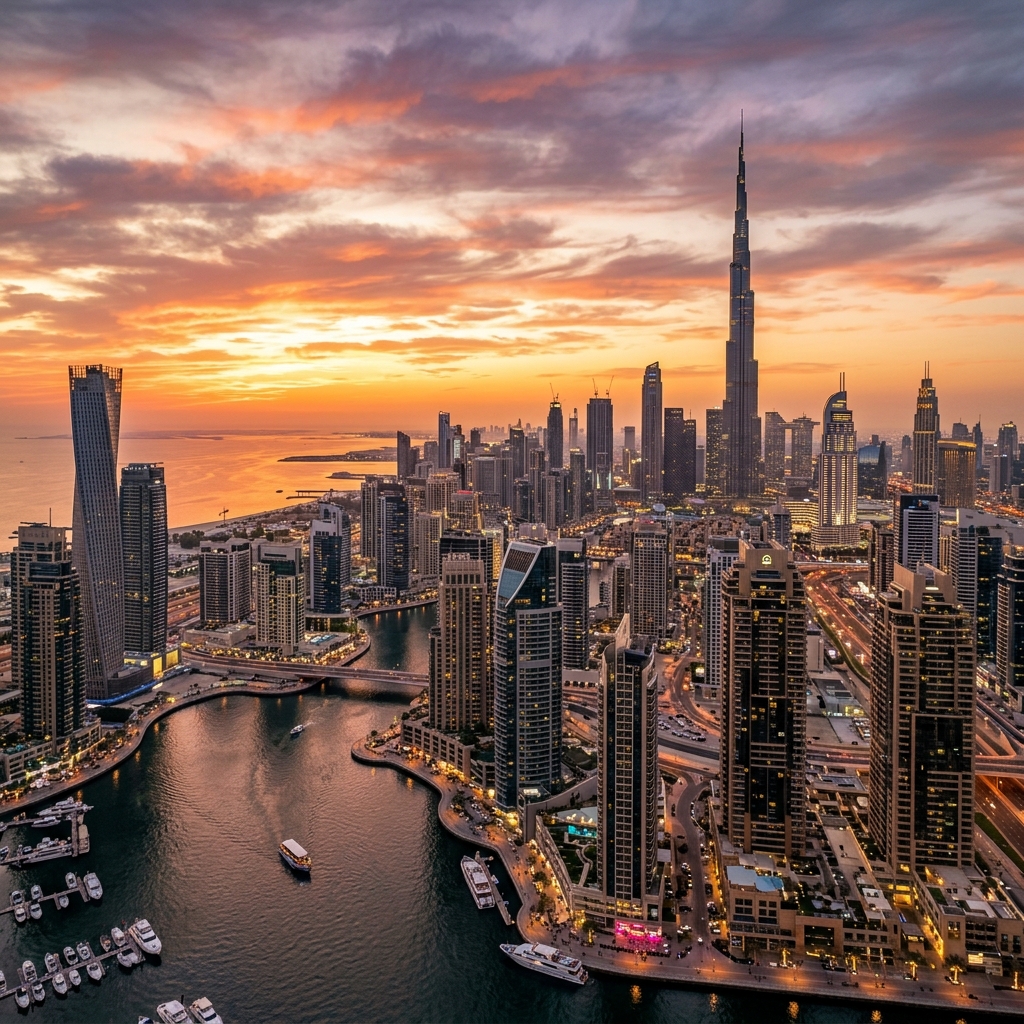
- Dubai Marina — A mature, high-demand waterfront community popular with both tenants and investors, known for consistent rental demand. Read about Airbnb and short-term rentals in Marina.
- Downtown Dubai — The city's premium core, home to Burj Khalifa and Dubai Mall, attractive for capital appreciation and luxury living.
- Business Bay — A central business and residential district with strong professional-tenant demand.
- Jumeirah Village Circle (JVC) — A lower entry-price community that has grown rapidly, popular with first-time and yield-focused investors.
- Emerging Corridors (Dubai South, Meydan, Expo City) — Infrastructure-led areas offering high long-term growth potential.
Legal Protection: What Foreign Investors Should Confirm Before Buying
Dubai's freehold system allows non-UAE nationals to hold full title in designated freehold areas, registered directly with the DLD. Before you commit to any purchase, confirm:
- The project or property is DLD-registered, and, for off-plan, correctly listed under Oqood.
- Escrow account details for off-plan payments, as required under UAE escrow law.
- The developer's track record on past project delivery.
- Whether the title deed (for ready property) or Oqood registration (for off-plan) will be issued in your name directly, with no intermediary holding structure unless you've specifically chosen one.
None of this replaces independent legal advice on your specific situation — but a credible real estate partner like SMS Realty will walk you through each of these points as standard practice, not as an afterthought.
Common Mistakes First-Time Dubai Investors Make
- Buying on projected yield alone: Without checking the area's actual rental demand and historical occupancy patterns.
- Skipping developer due diligence: Especially on off-plan purchases with a longer runway to handover.
- Underestimating total cost: By budgeting only for the purchase price and not transfer fees, service charges, or currency conversion costs.
- Treating remote investment as "hands-off forever": Even well-managed rental property needs periodic oversight, especially around tenancy renewals and service charge reviews.
- Not clarifying the residency/visa angle upfront: If Golden Visa eligibility is part of the investment rationale — confirm thresholds and rules at purchase. Read our guide on Golden Visa vs Investor Visa vs Property Visa.
Why Work With SMS Realty
SMS Realty operates as the dedicated Dubai property arm alongside the SMS Consulting group, which has built its advisory practice across company formation, tax, visas, and accounting for international clients — meaning the same buyer who invests in Dubai property through SMS Realty can also get coordinated guidance on the residency and structuring side of the decision, rather than juggling separate, disconnected advisors.
Frequently Asked Questions
Is it a good time to invest in Dubai real estate?
Can foreigners buy property in Dubai without UAE residency?
What is the minimum investment needed to buy property in Dubai?
Is off-plan or ready property better for investment?
Does investing in Dubai property guarantee a UAE Golden Visa?
How do NRI investors typically fund a Dubai property purchase?
Are rental yields in Dubai actually higher than in the UK or Europe?
What ongoing costs should I budget for after buying?
Final Thoughts
Investing in Dubai real estate can be a genuinely strong move for the right investor — but "right for you" depends on your goals, timeline, and how the numbers actually work for the specific area and property type you're considering, not on general market hype.
"The investors who succeed in Dubai treat real estate like any serious financial decision: they verify project registration, budget for total transaction costs, and partner with advisors who provide transparent, multi-angle guidance." — Sanjit Banerjee, CEO, SMS Realty
Ready to see what's available right now? SMS Realty can walk you through live listings that match your criteria — speak to an advisor today or view current property inventory.

Authored By
Sanjit Banerjee
Founder & CEO of SMS Realty, specializing in Dubai's strategic growth corridors and high-yield investment structures.